Cin So & So
I am at a bit of a crossroads in my winemaking, and I thought I would share it with you.
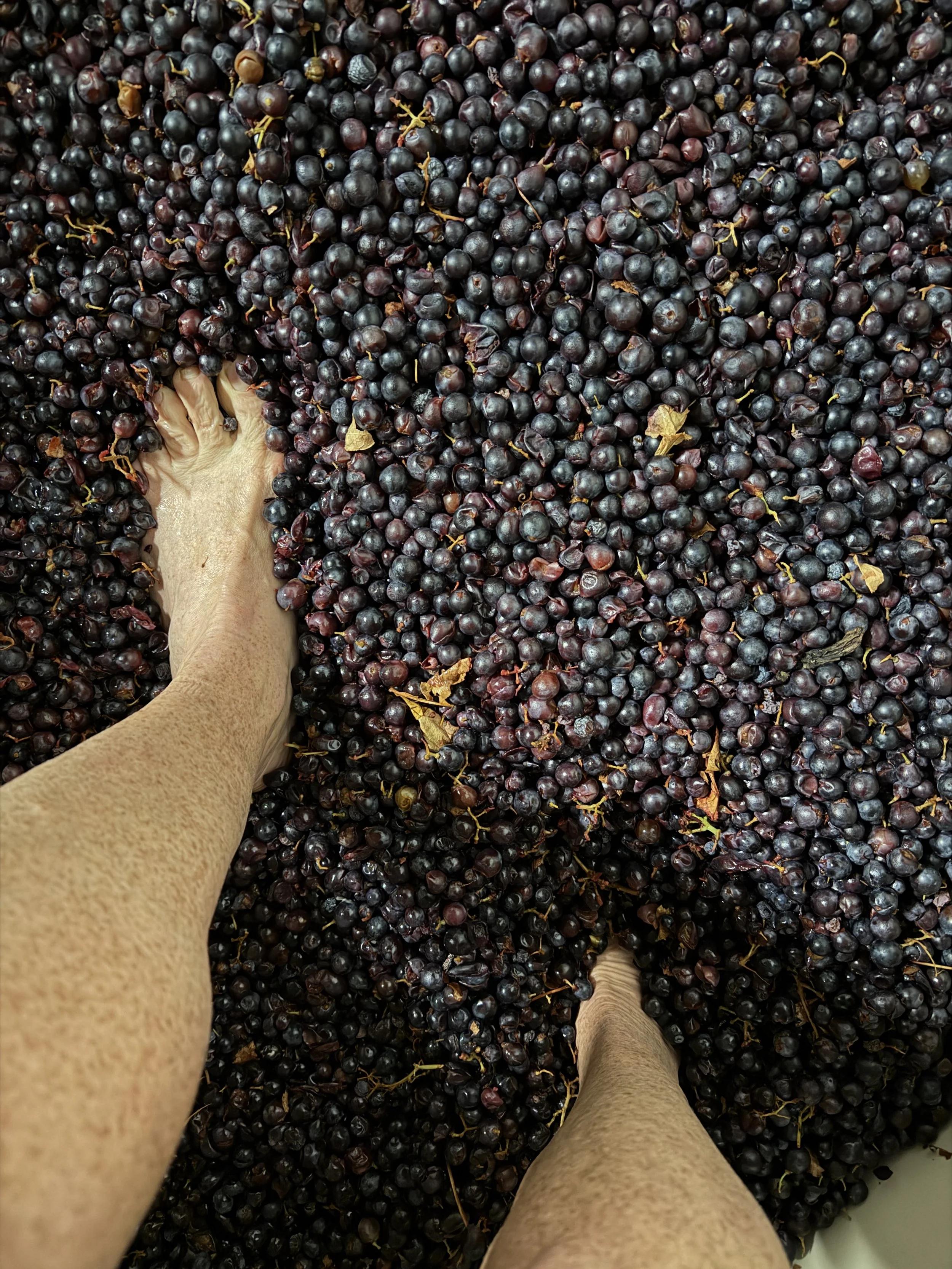
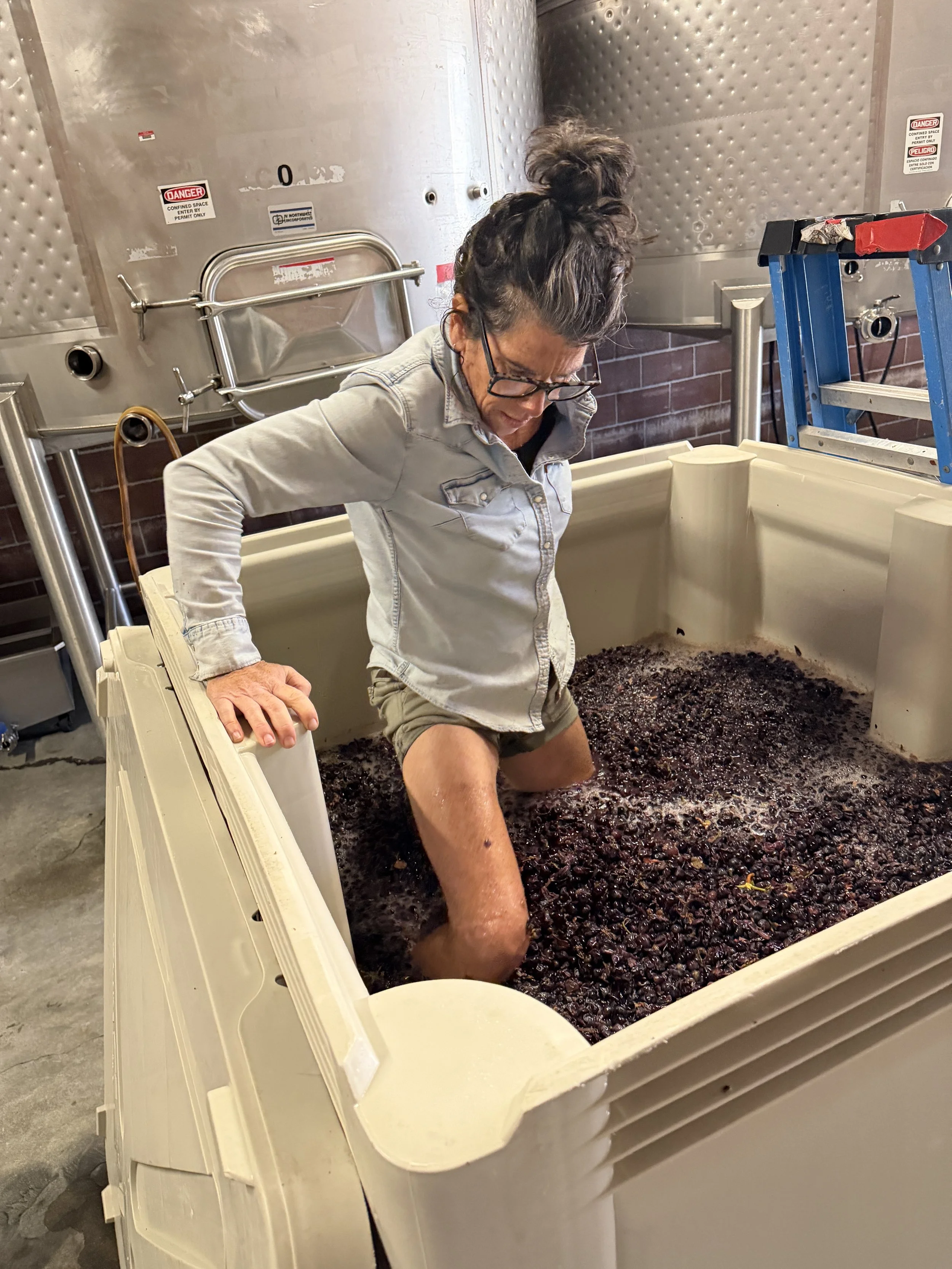
Jumping in has been my MO, and for better or worse, it has gotten me where I am. Given the opportunity to make wine in 2016, I did just that; both feet at full-force, I jumped into the bin without hesitation and started to stomp. (Yes, just like Lucille Ball.) I bought some fruit, and I made some wine. It was not great, but it was okay. I made twenty-five cases of Grenache, followed my gut, and listened to my winemaking friends. I was lucky that nothing went wrong because that is when you are truly a winemaker.
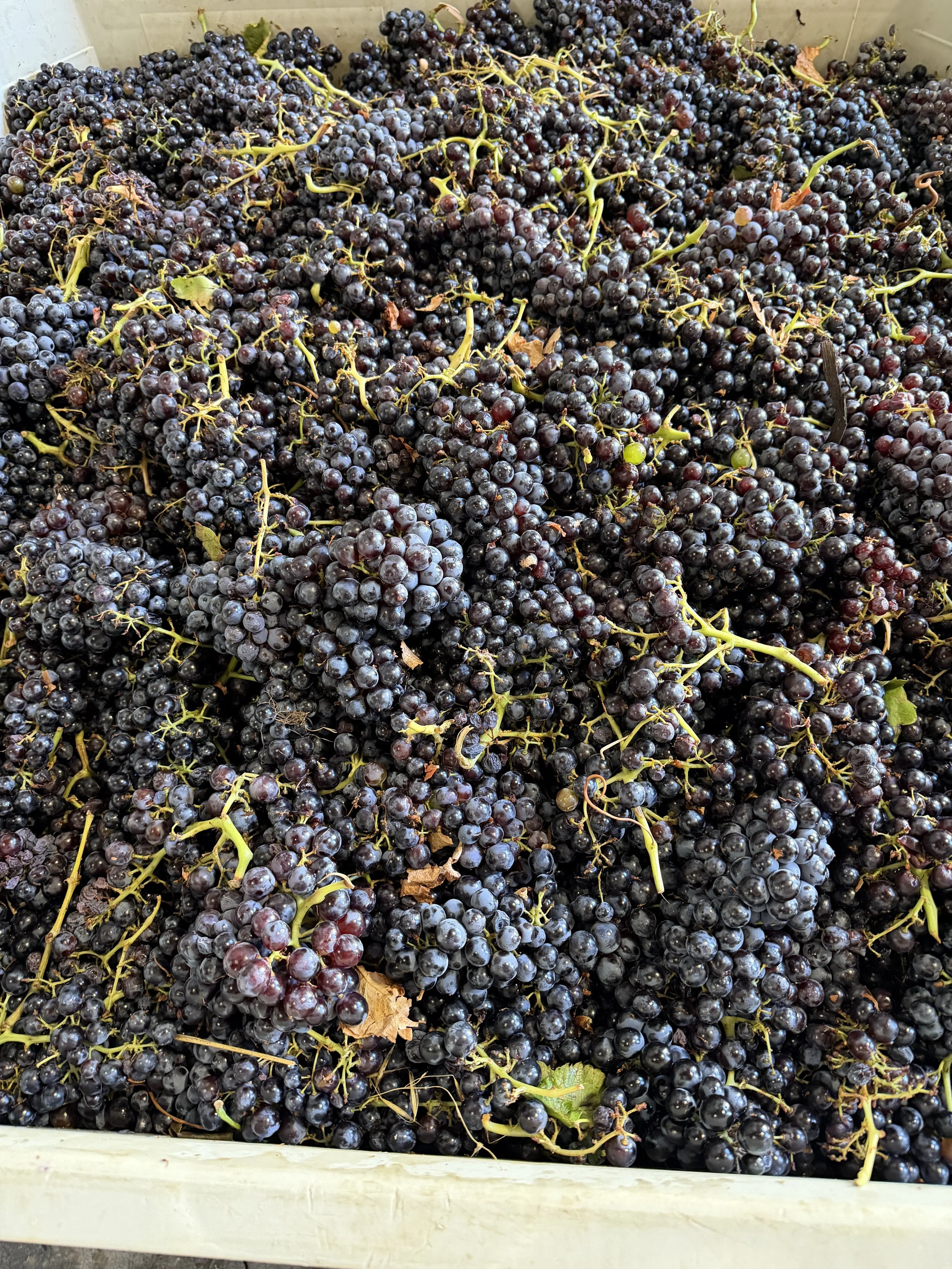
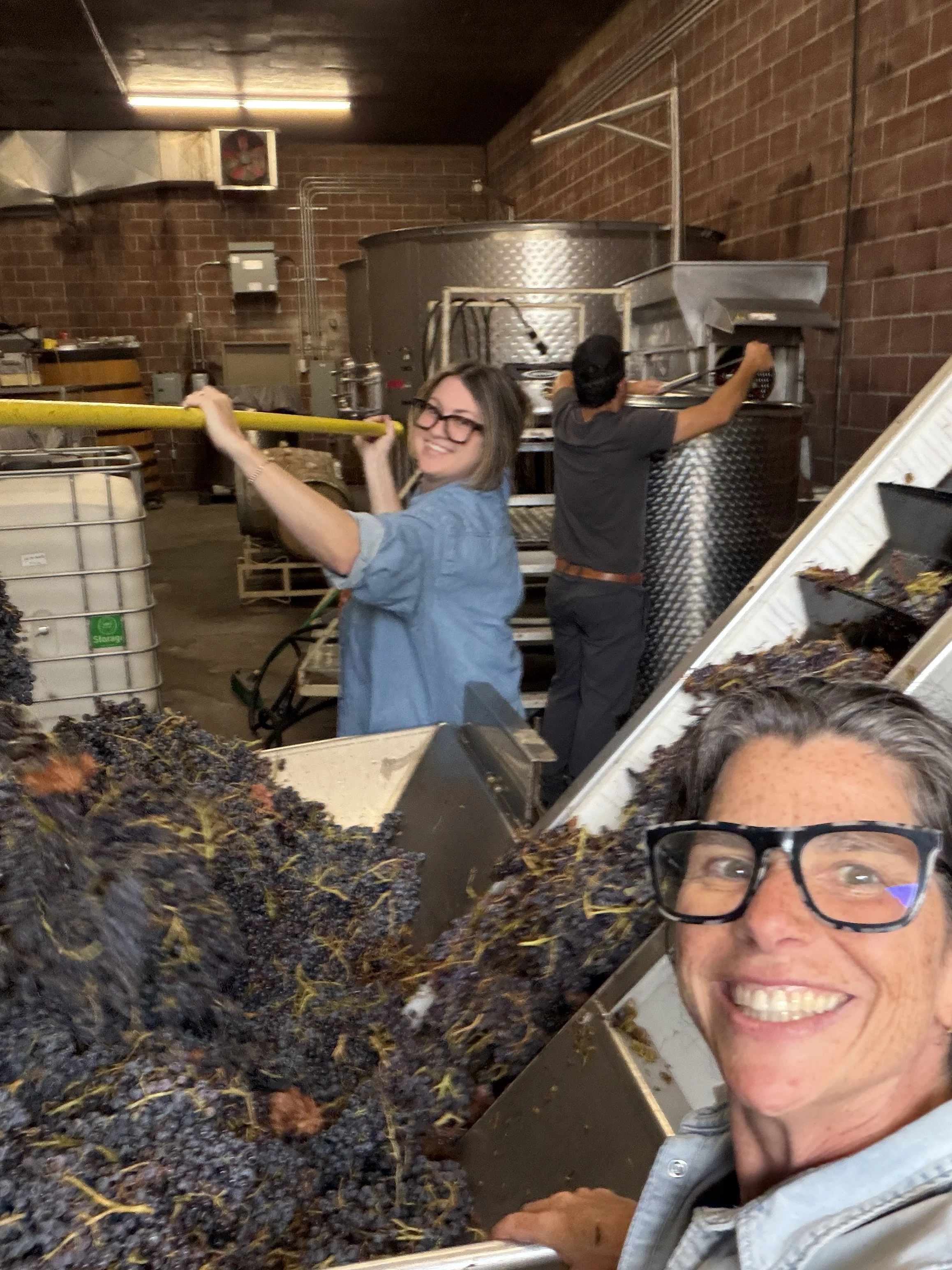
Fast forward, 2026 and a ton of Cinsault that is not cooperative.
I should back up. In 2022, Tipsy Rose had the opportunity to grow with the support of my dear friends Bre & Tom who believed in me and invested in the project. We added some varietals to the line up, and Cinsault was one of those varietals. I had no intention of a single varietal Cinsault, but rather a grape that would add lift and complexity to a Rhone style blend. This is, by the way, the most exciting part for me, that one can add “ingredients” to the list of blending grapes and create something remarkable. (Yes, to blend or not to blend, that is the question, but that is another post.) I could see a cool blend, beyond just GSM, and I wanted to make that, so I bought and made a Cinsault.
The first vintage, it was so easy and the resulting wine was, as they say, “crushable,” so I decided to bottle it solo, as well as some in the blend. It was well received. Wow, I must be dreaming, and surely this is easy to replicate. Right? well, as it turns out, no it is not so simple.
The following year, it was not so easy, and it continues to challenge me. I took notes, yes, I tried the same thing and tried different things, but still it doesn’t quite work, but why? Well, that is the conundrum of winemaking. It is both what thrills and defeats me on a daily basis. If you work with organic fruit and naturally in the winery, then each harvest produces grapes that have their own unique qualities, each year we are faced with something new, and each year, we begin again.
Here is the thing, I can try something new, but I won’t know if it works until September of the following year!
To be more specific, the first ton of Cinsault came in with imbalance, so before I even began, I was at a disadvantage. I prefer to minimize the work in the cellar not because I want to do less work, but because I think less is often more, but to do that, the fruit has to already have a balance of sugar, acid, pH, tannins, and potential alcohol. It has to have enough nutrient for the yeast to finish its job of converting sugar into alcohol. If it has all of these elements in balance, then my job is to treat the fruit with temperature and cleanliness to encourage fermentation and keep it clean to avoid any spoilage. Yes, there are many decisions that impact style and quality, so arguably, we are manipulating, but those variables don’t involve additions. If it is all in balance when the fruit is picked, we don’t need to add anything, but what do we do when it is out of balance?
I cannot afford to just throw it away, so I have to use the tools available to me, which means making some additions. Now, there are additions and there are additions, by which I mean, there are things that are naturally occurring in grapes that we can supplement—tartaric acid, yeast, nutrient, all of which I am ok with people using, though I prefer not to use them. That said, sometimes being a good winemaker means recognizing when your wine will suffer if you do not. Ultimately, it is my job to make a delicious glass of wine. I prefer to do that without harsh additions that are masking flaws in the wine, likely not good for your body or the earth, and value quantity over quality. I believe in the artisanal production in all things—this is the very nature of beauty. But, yeast, acid, nutrient…these are naturally occurring in the fruit. Do you see the conundrum?
I added yeast. Yes, “the horror, the horror,” says the world of natural wine, but what is the alternative? So, I inoculated the grapes with a yeast strain that I thought would help the grapes ferment more quickly because I was concerned about spoilage. I was wrestling with this decision, on a looping repetition of concern to Steven, to which he said, “don’t you use store bought yeast to make your pizza?”
How dare he?
I also added tartaric acid. I told a friend in the wine world that I struggled with this decision, to which she said, “worrying about added tartaric acid to wine is like an environmentalist worrying about someone tossing an apple core out of a car window.”
Another fair point, and how dare she?
Without the TA, the pH was so dangerously high that the wine would surely have had a volatile acidity problem, which gives an unpleasant aroma to wine and can impact flavor, as well. Without the yeast, the fermentation might be too slow, allowing native, wild yeasts to dominate and again, encourage the spoilage yeasts to thrive and make the wine smell and taste bad.
I want to make to make the best wine that I can, meaning that it tastes delicious and that it is precise, clean, and honest. I want to hand craft it from the best grapes that I can find that have been grown with a responsibility for the earth’s sustainability. I want to let the grapes express their origins, so I will avoid manipulation that disguises wine. I make California wines from organic fruit, with minimal intervention.
As you can tell, this is a philosophical moment for me, but in the end, it is about honesty and transparency of practice that makes “good” wine, as what that is, is so subjective.
The jury is still out on the Cinsault, but I will keep you posted. The grower was dismayed by the numbers, so he gave me a second ton of fruit to experiment with. That is extraordinarily generous, but it also reflects his own commitment to quality. I hope to make him proud. Let’s ee who this Cin So & So turns out to be.
Cheers, Maria