Cultivating Optimism
I am excited for all that 2026 has to promise. At my networking group, I was asked for my word of the year, a simple task you might think, but then when I had to put that intention into a single word, I found it was not so easy. For starters, there is so much that I want to accomplish, personally and professionally.
Personally, I have a lot on my list! I want to start playing tennis again. I am running again, which feels good but is so hard! I am committed to finally speaking a foreign language, so taking French lessons starting Monday with a former student of mine from Salve. Je suis trés excitée de commencer!! There is more... I would like to get better at Pilates (so Anna stops yelling at me), and I am dedicated to mastering cacio e pepe, which is currently my favorite pasta after a simple pile of spaghetti Pomodoro, of course. So, that’s a lot, and it is not the whole list.
Workwise, I have lofty goals, too. The wine biz is not easy right now, but I am ready for growth this year, so we have new wines, new classes, fun cooking demos, and we are working on getting our food license back, so you may see our “little sandwiches” again very soon! (Do you remember the seeded ficelle with thinly slice salame and dijon with microgreens? I miss it, how about you?) I want to learn about a few new things, and there is so much I do not know! We have started a new small group “class,” dedicated to learning something new. (I feel like I have said enough about the wine world’s “standard hits!”) These opportunities to learn along the way with us will be invite only and offered to wine club members first! The next one is Sunday, February 22 with a focus on South American wines. Matt is going to lead the discussion because he is far more knowledgeable than I. Please let me know if you are interested in joining us!
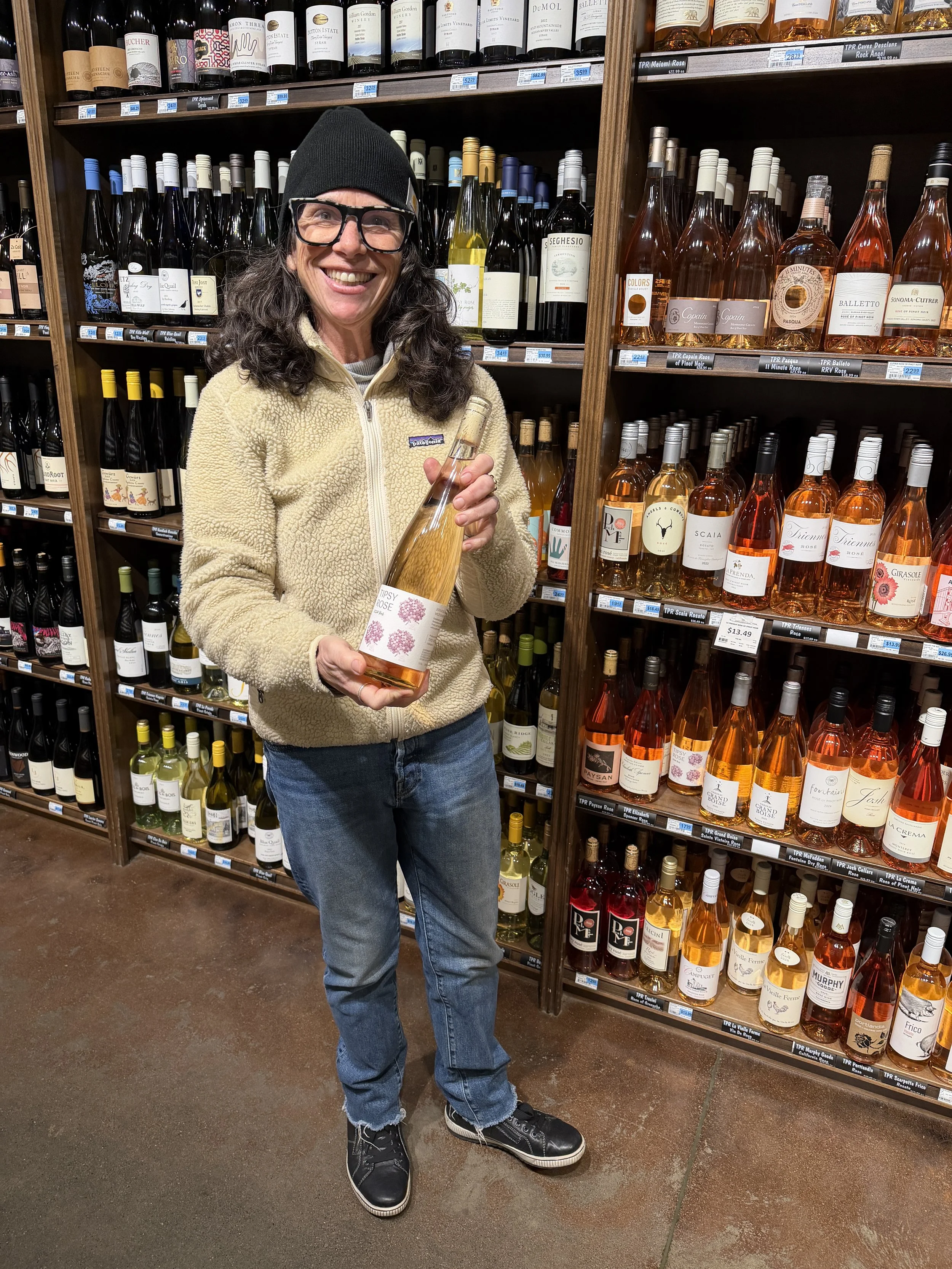
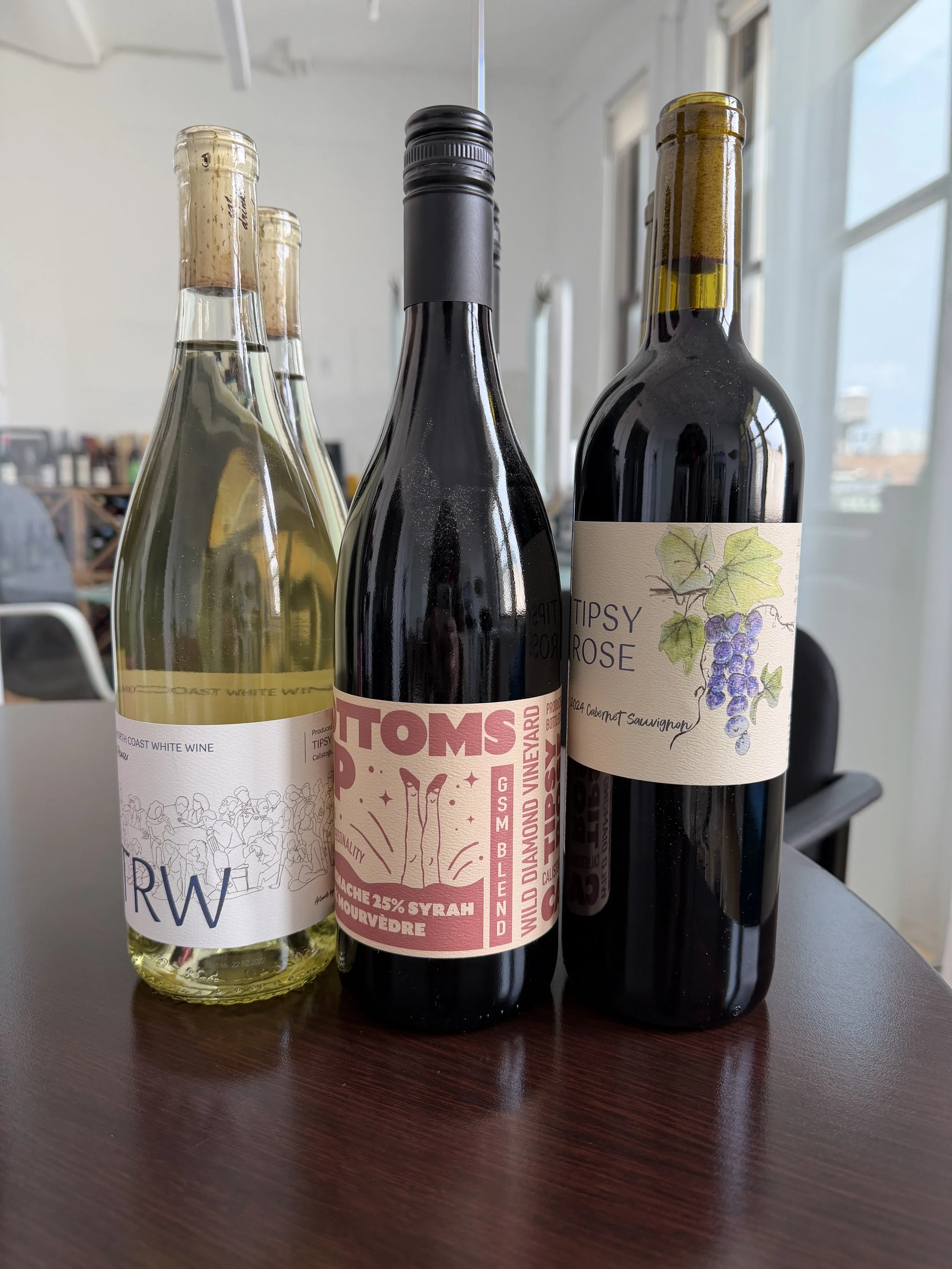
In news from the other coast, Tipsy Rose is growing, (woohoo!) and I am truly grateful for your help with that. Keep up the good work! I am presenting the wines at Femme Fete in Boston on February 28th, and I hope to see you there. (Tasting 40+ amazing wines for just $60!!) It is a festival celebrating female, natural winemakers from around the globe, who share a commitment to the SlowWine Movement. I am thrilled to have been included in the lineup. I can tell you that some of my own wine heroines will be there!
As always, the wine club continues to be a priority for us at NWC&G, so you will get access to the coolest stuff we find! I love finding wines for you to enjoy, and Lianna and Matt have been helping me reach outside my comfort zone to find new things for you. Much more to come. We are also increasing the options for learning opportunities, so watch your emails. We are adding a monthly virtual event to taste and talk about the January picks and what to pair with them.
January’s Pressed for Thought
An open discussion about winemaking & wine drinking!
Tuesday January 20th 6-7pm
REGISTER: https://us05web.zoom.us/meeting/register/XtLYjXHTRLqPmte5qn6imw
Responsible Indulgence: January Wine Notes
Shout out to Matt Rose for his help with all these wine notes!
Value Wines
24 Prisma Rosé Pinot Noir
Made from 20+ year old vines in Casablanca, Chile at 600 feet elevation, this is no simple rosé. The maceration is just a couple of hours to give the wine a pale pink hue that is alluring and makes me long for summer warmth. I know it is far too early for that kind of talk in January, but I picked this one for its ability to transpose me to a beach moment. The kaleidoscopic image on the label reminds me of squinting to see the glistening ocean’s horizon in the bright sunshine.
The wine has both summer berry and earthy herbaceous flavors that make it an ideal wine for this time of year. The choice to ferment and age in stainless steel makes the wine supremely refreshing after the savory minerality on the finish. It almost tastes of the ocean’s brine, so enjoy it with some oysters—it is the best time for them!
24 Vee-Vee Vinho Verde
This is another nod toward the summer winds, hoping they will blow this way sooner rather than later. Most would argue that this is a summer wine, but you know me and rules. The richer the food, the more we need acidity to cut through it, and this flinty, citrus refreshing wine brings that brightness and just a hint of effervescence, too!
It is a vivacious wine that will pair beautifully with mushroom risotto, roasted vegetables, or lighter meats. I may give it a try with that Cacio e Pepe that we will make this weekend!
22 Chateau d’Oupia Minervois Rouge
Château d’Oupia is a sustainably farmed, 60-hectare estate in France’s Languedoc region, owned and run by Marie-Pierre Iché. The vineyards span a diverse mix of rocky clay, clay, limestone, sand, and sandstone soils, ideal for Mediterranean varieties such as Carignan, Grenache, Cinsault, and Syrah. At the heart of the property stands Château d’Oupia itself—a genuine medieval castle that gives the estate its name.
This sustainably farmed Minervois red from France’s Languedoc blends 50% Carignan, 40% Syrah, and 10% Grenache from 40-year-old vines rooted in clay and limestone soils. Carbonic maceration of the Carignan brings lifted aromatics and juicy red fruit, while the long maceration of Syrah and Grenache adds depth, structure, and spice. Fermented with selected yeasts and aged in concrete, then bottled unfined and unfiltered with minimal sulfur, the wine shows vibrant notes of ripe cherry, blackberry, and wild herbs, framed by fresh acidity, gentle tannins, and a mineral, savory finish.
2 Le Bio Balthazar
Languedoc-Roussillon, along France’s Mediterranean coast, has become an important source of high-quality, characterful white wines. Abundant sunshine is balanced by coastal breezes and higher-elevation sites, helping preserve freshness and aromatics. A wide range of soils and grape varieties—such as Grenache Blanc, Picpoul, Vermentino, and Marsanne, and Roussane—allow producers to craft whites that are vibrant, textured, and expressive, offering excellent value and a clear sense of place. Pierrick Harang, the winemaker at Le Bio Balthazar has been a wine and grape buyer for major co-operatives in the area since 2007, and has since added making wine to his resume. He uses a mere 2% of the grapes that he sells to produce his own wines.
Le Bio Balthazar is a vibrant white blend from Minervois (35% Rolle/Vermentino, 35% Grenache Blanc, 30% Marsanne) that opens with floral aromatics and bright notes of mandarin and peach. On the palate it’s fresh, juicy, and pithy, leading to a savory, herbaceous finish, making it an excellent value with both lively fruit and intriguing complexity. Perfect to pair with poultry and fresh seafood or a delicious cheese board.
23 Les Champs Des Maures
100% Cabernet Sauvignon from Les Chemins de Bassac
Located in France’s Languedoc-Roussillon, this estate is owned and run by husband-and-wife team Bruno and Thama Trigueiro, a former architect duo from Brazil who took over the property in 2016 in search of a healthier, more grounded life away from the pace of São Paulo. The 49-acre vineyard has been farmed organically for over 30 years and was further converted to biodynamic viticulture in 2019, earning Demeter certification. With a deep respect for the land and its rhythms, Bruno and Thama craft wines that reflect both their thoughtful stewardship and the character of the region, producing approximately 60,000 bottles annually.
Les Champs des Maures is 100% Cabernet Sauvignon. The macerations take place in concrete vats. Press downs are soft and very long to slowly extract color, tannins, and aromas and so that everything harmoniously blends into the wine. Bottling is done without filtration or fining, with just a light sulfur addition. Notes of soft spices, dry tannins, dark fruit: an easy-going Southern-style red for all occasions.
22 Cacique Maravilla Pipeño
Coming from a very special and very old vineyard in the Secano Interior de Yumbel in the Central Valley of Chile, is the 2022 Cacique Maravilla Pipeño. Pipeño is 100% Pais, a varietal that is believed to have come to the Americas in the 16th century with the Spanish colonists. Pais is almost exclusively found in Chile, but can also be found in Argentina (known as Criolla Chica), and parts of Central America.
Pais has been grown by the Gutiérrez family on their same vineyard since 1776, so this grape is incredibly important to their community and identity. The terroir of the vineyard is different from most of Chile’s viticultural landscape. The vineyard is mostly composed of volcanic soils, giving the grapes a completely different flavor profile. Pipeño is smokey; But if served slightly chilled, the smoke subsides a bit and gives way to a juicy body, and a fresh palate with notes of red berries, a bouquet of herbs, and muddled fruits. Pair with grilled red meats, pizza, or soft double or triple cream cheese.
23 Lungarotti Grechetto
Umbria, often called the “green heart of Italy,” is a historic winemaking region defined by rolling hills, ancient vineyards, and a continental climate moderated by lakes and rivers. Its clay-rich soils, combined with warm days and cool nights, give Umbrian wines freshness, structure, and clear varietal expression. Best known for native grapes such as Grechetto and Sagrantino, Umbria balances centuries-old traditions with modern, precise winemaking, producing wines that are distinctive, food-friendly, and deeply rooted in place.
Lungarotti’s 2023 Grechetto Umbria IGT is a dry, well-structured white that showcases the character of one of Umbria’s oldest native varietals. Straw yellow with green reflections, it opens with an intense, fragrant bouquet of exotic fruits, pineapple, melon and citrus. On the palate it is fresh and balanced, with a lively acidity and a subtle, pleasantly bitter finish. Made of 100% Grechetto, using free-run juice and cold fermentation in stainless steel, then aged on fine lees, it is refined yet approachable, ideal as an aperitif and an excellent match for cheese-based pasta, spicy dishes, seafood, roasted fish, vegetables, legumes, and fresh or lightly aged cheeses.
22 Domaine Romuald Petit, Chiroubles, Gamay
Romuald Petit farms 12 hectares split between the Mâconnais and Beaujolais, with holdings in Saint-Vérand and Pruzilly, as well as Morgon, Chiroubles, and Saint-Amour. His parcels vary widely in soil, rootstock, and vine age, ranging from young plantings to vines over 100 years old. Each parcel is vinified separately to preserve its character, with final blends determined before bottling. Romuald farms without chemical inputs, began organic conversion in 2019, harvests by hand, and ferments all wines with indigenous yeasts. Chiroubles, where this wine is produced, is one of the smallest Beaujolais Crus at 315 hectares, known for its high-elevation, and steep vineyards. Romuald’s 2 hectares in the lieu-dit Les Côtes were planted by his great-grandfather after WWII on granite and sandy soils, giving some of the earliest-ripening fruit in the appellation.
The 2022 Chiroubles from Domaine Romuald Petit is amacerated for fourteen days, and is then aged in concrete vats for eight months. Chiroubles is bright and airy, offering fresh red cherry and raspberry aromas with floral hints of violet and a light granitic minerality. The palate is juicy and energetic, with soft tannins, lively acidity, and a clean, refreshing finish that highlights the cru’s high-elevation elegance and drink-now appeal.
23 Sylvain Bailly Beaucharmes
Domaine Sylvain Bailly is a historic family estate located in the Loire Valley that has been handed down through generations of vignerons since 1700. The domaine spans 12 hectares across 23 parcels, mainly around the village of Bué. Its soils are composed of chalk and clay, enabling Pinot Noir (25% of plantings) to flourish in clay soils while Sauvignon Blanc is grown across both soil types. Vinification is carried out by grouping parcels with similar exposure, soils, and vine age, resulting in wines celebrated for their consistency, balance, texture, and excellent value in an appellation known for variable quality.
The 2023 Domaine Sylvain Bailly Quincy Beaucharme is a lively, refreshing Sauvignon Blanc from the Loire with a pale, bright yellow hue and an expressive nose showing herbal grass, intriguing melonand citrus notes. On the palate it delivers crisp acidity and striking minerality balanced with vibrant fruit flavors and a clean, dry finish, making it both food-friendly and thirst-quenching. Overall, it’selegant and well-balanced with a steely, refreshing profile that pairs beautifully with seafood and light dishes.
20 Tedeschi Capitel Nicalo Valpolicella
Valpolicella is a historic wine region in northeastern Italy, located in the Veneto, between stunning lakes and mountains. Known primarily for its Corvina-based red wines, the region benefits from a mild climate and a mix of soil types ranging from limestone, to volcanic and alluvial soils that lend both freshness and structure to the wines. Valpolicella is especially renowned for its diverse styles, ranging from light and vibrant Valpolicella Classico to richer Valpolicella Superiore and the powerful, complex Amarone della Valpolicella, made using partially dried grapes.
This 2020 Valpolicella Superiore shows a bright ruby color and opens with an aromatic bouquet of wild and dark red berries mingled with spicy oak-derived vanilla and cedar notes, along with hints of savory herbs and dried fruit. On the palate it’s medium-full bodied and well-structured, with fresh, lively acidity and balanced tannins framing flavors of black cherry, plum, subtle mocha and spice.
22 Ormanni Chianti Classico
Chianti DOCG is one of Italy’s most historic and recognizable wine regions, located in Tuscany between Florence and Siena. Its wines are based primarily on the Sangiovese grape, which gives Chianti its hallmark freshness, bright acidity, and flavors of sour cherry, red berries, dried herbs, and subtle earthiness. The region encompasses several subzones with varying soils and elevations, contributing to stylistic diversity, but all Chianti wines emphasize balance, food-friendliness, and a clear expression of place.
The 2022 Ormanni Chianti Classico opens with straightforward aromas of cherry, red berries, and a touch of dried herbs. On the palate it’s medium-bodied and lively, with bright red fruit flavors, gentle earthy notes, and fresh acidity that keeps it easy to drink. The tannins are firm but smooth, and the finish is clean and savory, making it a natural match for simple Italian food.
Collector
22 Old Vine Zinfandel, Sonoma Valley, Armor Plate Vineyard
The vines are over 130 years old for this wine, which is incredible to me. This about how many bottles of wine those vines have produced! Steve Matthiasson always works in the winery with a modicum of reserve and control, so the wines never bowl you over, and this is another example of his skill as a winemaker. I admire his work and his wines so much! I also love to drink them.
This wine has a lush berry, plum and pear quality for me and supple tannins. It is soft on the palate, rushing over your tongue with a vibrancy and an intensity of flavor that will make you want to slow down and make it last. I enjoy this old vine zine with pan seared rib eyes and a salad of radicchios. It liked the bitter leaves and was a foil to the meat, it was a harmonious meal that I highly recommend.
2023 Broc Vine Starr
Broc Cellars is a California based natural wine producer and tasting destination founded by winemaker Chris Brockway. Based in Berkeley—not Sonoma itself—the winery sources organically grown grapes from vineyards across Sonoma, Mendocino and other California regions, and crafts low‑intervention, spontaneously fermented wines that emphasize bright acidity, lower alcohol, and true fruit character. Established in the early 2000s, Broc has become known for its approachable portfolio of reds, whites and rosés that reflect a fresh, food‑friendly style rooted in sustainable farming and minimal cellar manipulation.
The Broc Cellars 2023 Vine Starr Zinfandel is a bright, easy-drinking style, different from your typical big boned and boozy, California Zin. At only 12% ABV, it’s more light and fresh with berry flavors like blackberry and huckleberry. It has a hint of tea and spice, with lively acidity and a light, smooth body. This wine is juicy, approachable, and pairs well with food without feeling heavy or overpowered.
Final thoughts while I sip on a red zin and nearly swoon,
The truth is, winemaking is a ton of work, and winemakers are so often behind the scenes. Next time you sip on a glass of wine, remember that a hundred small decisions went into that glass, a year of growing, picking, crushing, fermenting, pressing aging and packaging went into that glass, and at every stage the work is laborious. We do it because we love it and we want you to enjoy it, so keep doing just that with responsible indulgence!!
By the way, my word is optimistic, which I remain, always. I thank all of you for that!
Cheers, The Team at NWC&G